Lexisnexis Criminal Records provides a searchable “Criminal History Records” database that aggregates arrest logs, Department of Corrections custody details, and final court convictions across 36 U.S. states. The collection spans records from 1970 to the present and includes both state and federal district court filings. Advanced filters let users narrow results by offence type, jurisdiction, and exact filing dates, creating a clear timeline of an individual’s criminal activity. Data are organized into three groups—Arrest Records, Court Records, and Department of Corrections Records—covering felony and misdemeanor filings. In 2023 the service indexed more than 12 million arrest entries and over 7 million court dispositions.
Law firms rely on LexisNexis Public Records to locate witnesses, verify addresses, and retrieve prior civil filings in a single session, a practice highlighted by a partner at a 14‑lawyer firm. Insurance adjusters use OrderPoint, which pulls police‑report data from more than 4,500 U.S. law‑enforcement agencies and delivers it in standardized XML, cutting average claim‑processing time by roughly 30 percent. The platform also supports large‑scale government queries; ICE performed millions of checks in one fiscal year to assess immigration status, past convictions, and residency history. Users can obtain an instant snapshot of any person’s public‑record profile, including current and former addresses, phone numbers, docket entries, and non‑confidential civil or criminal filings. The criminal‑records search form requires a permissible‑use selection under DPPA or GLBA and at least one identifier, while opt‑out requests are processed within about 30 days.
LexisNexis Criminal Records Database Overview
At lexis.com users can query the “Criminal History Records” repository, which aggregates arrest logs, Department of Corrections custody details, and final court convictions for 36 U.S. states. The collection spans records dated from 1970 through the current year and integrates both state and federal district court filings. Advanced search filters let analysts narrow results by offence type, jurisdiction, and exact filing dates, delivering a view of an individual’s criminal timeline.
https://www.lexisnexis.com/ga_criminalrecords/ 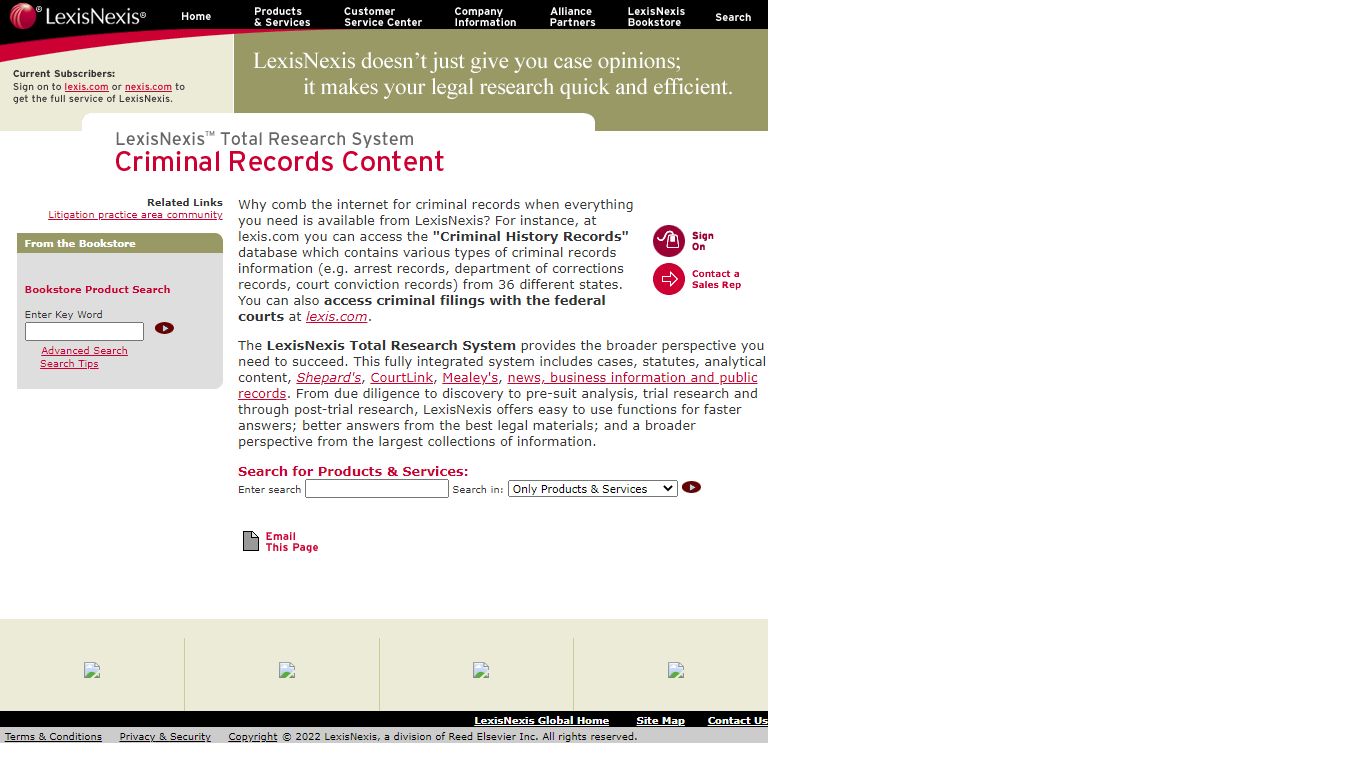
Criminal Records Service Details on lexisnexis.custhelp.com
The Criminal Records offering aggregates derogatory data from statewide criminal courts, the Department of Corrections, county arrest logs, and motor vehicle violations. It categorises information into three distinct groups: Arrest Records, Court Records, and Department of Corrections Records. In 2023 the service indexed over 12 million arrest entries and more than 7 million court dispositions, providing searchable access to both felony and misdemeanor filings.
https://lexisnexis.custhelp.com/app/answers/answer_view/a_id/1097151/~/criminal-records- 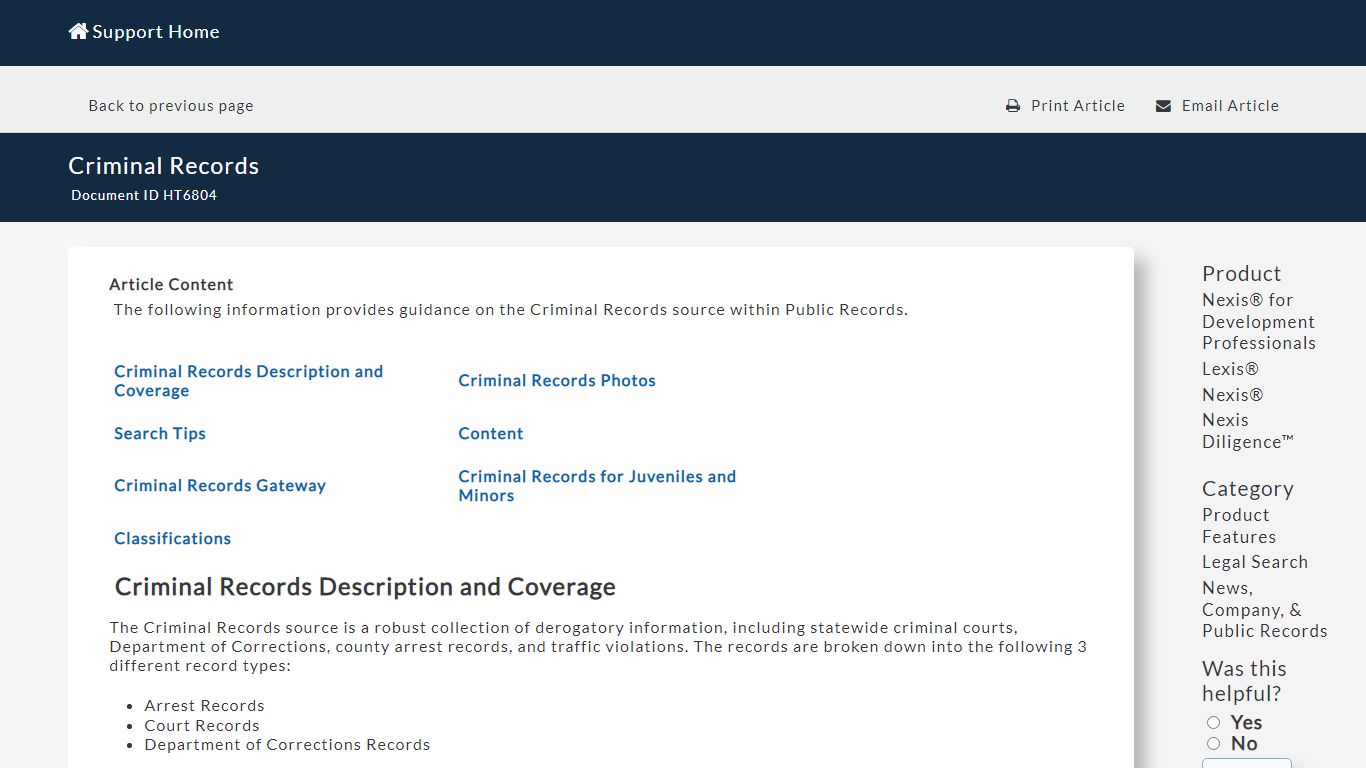
LexisNexis Public Records for Legal Research and Due Diligence
LexisNexis Public Records is frequently used by law firms to identify potential parties, locate witnesses, and conduct the due‑diligence investigations required for litigation strategy. A partner at a 14‑lawyer firm reported that the platform enabled him to retrieve an out‑of‑state witness’s current address, phone number, and prior civil filings within a single session, eliminating the need for multiple county clerk visits.
https://www.lexisnexis.com/en-us/products/public-records.page
Police Records Retrieval through LexisNexis OrderPoint
OrderPoint consolidates police‑report data for insurance adjusters, cutting the average claim‑processing time by roughly 30 percent. The service aggregates incident reports from over 4 500 U.S. law‑enforcement agencies and delivers them in a standardised XML format. Because the output is classified as a non‑consumer report under the Fair Credit Reporting Act, insurers can integrate the data without triggering additional compliance steps.
https://risk.lexisnexis.com/products/police-records-retrieval 
Step‑by‑Step Guide to Access LexisNexis Public Records
Clients can reach LexisNexis® Public Records via two distinct navigation paths. The first method requires selecting “Public Records” from the product selector grid located in the upper‑left corner of the dashboard. The second method involves clicking the “Public Records” link under the “Explore > Content” menu on the home screen. Both routes open a search interface that supports Boolean operators, date‑range filters, and jurisdiction‑specific drop‑downs.

Accurint® Secure Login and Support Overview
Users must begin every session at https://www.accurint.com, where multifactor authentication validates identity before any personal credentials are transmitted. The platform advises against entering login details on any other domain to prevent credential compromise. For billing inquiries, customers can email the support desk or call 1‑866‑528‑0570; training requests are handled through the 1‑800‑201‑6411 line or via the learning portal at learn.lexisnexis.com.

RefCheck Criminal Background Verification for South African Candidates
RefCheck enables employers to obtain a SAPS 69 Report for any South African applicant. The process requires a fingerprint scan, which is cross‑checked against the South African Police Service’s Automated Fingerprint Identification System (AFIS). Matches are returned within 24 hours, and the final report includes conviction dates, charge descriptions, and sentencing outcomes for all recorded offences.
https://www.lexisnexis.co.za/lexisrefcheck/lexis-refcheck-verifications/criminal-checks 
LexisNexis Information Suppression (Opt‑Out) Process
Requests to remove personal data from LexisNexis public‑records products are submitted through the online opt‑out portal. After a request is filed, the system queues the entry for review; typical processing requires up to 30 days before the information disappears from searchable databases. Submitters receive an automated confirmation email containing a reference number for status tracking.
https://optout.lexisnexis.com/ 
Criminal Records Search Form Guidance on LexisNexis Help Center
The search form requires users to select a permissible‑use category from the Drivers’ Privacy Protection Act (DPPA) or the Gramm‑Leach‑Bliley Act (GLBA) dropdown menus before entering query parameters. At least one field—such as name, date of birth, or social security number—must be populated; the form does not demand completion of every field, allowing targeted inquiries while remaining compliant with privacy regulations.
ICE’s Extensive Use of LexisNexis for Immigration Enforcement
Investigations documented by TechCrunch in June 2022 reveal that U.S. Immigration and Customs Enforcement (ICE) executed millions of LexisNexis queries in a single fiscal year, far exceeding the volume previously reported for high‑risk criminal checks. The agency leveraged the platform to assess immigration status, prior convictions, and residency history for individuals flagged during border and interior operations.

Instant Access to LexisNexis Public Records for Any Individual
By entering a person’s full legal name into the LexisNexis portal, users receive a snapshot of that individual’s public‑record profile within seconds. Results include current and previous addresses, telephone numbers, court docket entries, and any associated civil or criminal filings that are not subject to confidentiality restrictions.
Contact Us
Address: 7 million court
https://www.publicsrecords.com/lexisnexis-records 
Related Search Terms
Virginia Beach Jail Inmate Info Fayette County Court Records Online Pueblo County Divorce Records